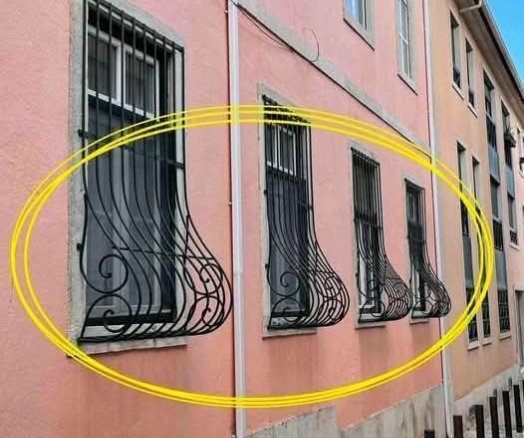
Architecture has the power to surprise us, especially when a building features design elements that break away from the usual patterns. The image above showcases an intriguing example: a row of windows fitted with uniquely curved metal grilles that extend outward in an elegant, almost sculptural form. These unusual shapes instantly catch the eye and raise an obvious question—why would a building incorporate window bars that bend outward instead of resting flat against the wall?
At first glance, the outward-curving grilles appear purely decorative. Their flowing, wave-like shapes add a touch of artistic charm to the otherwise simple exterior. The pink façade, combined with the ornamental metalwork, creates a picturesque setting reminiscent of historic European streets where aesthetic expression blends seamlessly with everyday function. But beyond their visual appeal, these grilles also carry a practical purpose.
In many historic districts, window bars serve as a security feature. Traditional flat grilles restrict access but can also make windows feel closed off or prison-like. The curved design seen here offers a more inviting alternative. By gently pushing the bars outward, the windows appear less harsh while still maintaining security. The additional space created between the glass and the metal frame allows better airflow and gives residents the option to place small items—such as flowerpots—on the ledge. This combines beauty with practicality, enhancing both the building’s safety and its charm.
Another interesting aspect is the craftsmanship behind these metal grilles. Their curves, loops, and symmetrical lines indicate the work of a skilled ironworker. Rather than using simple straight bars, the designer chose to incorporate decorative scrolls and flowing shapes. This transforms a functional object into architectural art. It’s a reminder of how traditional crafts can give character to urban environments, making each street visually unique rather than uniform.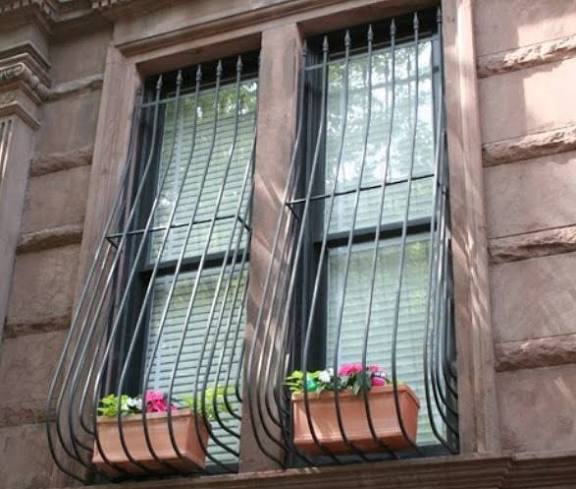
Such features are also becoming increasingly popular in tourism-rich areas. Cities with older architecture often maintain or restore decorative elements to preserve cultural identity. Visitors enjoy walking through neighborhoods where even basic structural components feel handcrafted and intentional. These window grilles serve as a subtle but meaningful representation of cultural heritage, blending modern safety standards with classic design techniques.
Beyond their beauty, these outward-curved bars reveal an interesting interplay between design and everyday life. They allow sunlight to reach the interior without casting harsh shadows that flat grilles might produce. Their curved shape also minimizes the feeling of confinement for the occupants inside, giving the room a more open and airy impression.
In a world where many buildings opt for minimalistic, streamlined designs, details like these remind us of the value of creativity and craftsmanship. Whether you encounter them on a quiet residential street or in the heart of a historic district, such architectural flourishes add life, personality, and artistic meaning to the structures around us.
The curved window grilles seen here are more than just security features—they are a celebration of style, tradition, and thoughtful design. Their presence transforms a simple exterior into a charming, memorable architectural scene that captures attention and sparks curiosity.