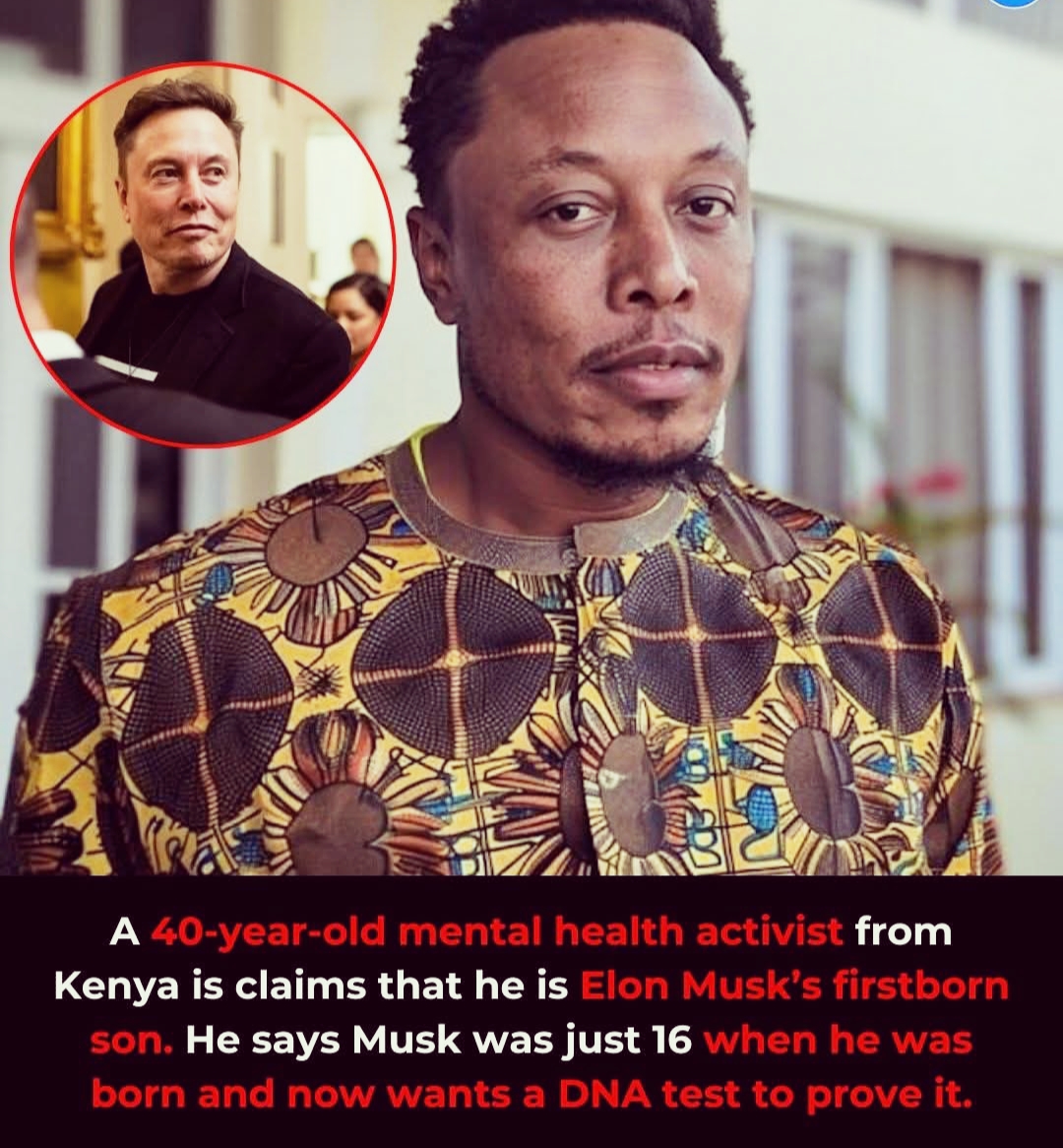
A curious story circulating on social media has caught global attention after a 40-year-old Kenyan mental health activist claimed that billionaire entrepreneur Elon Musk is his biological father. The man says he has spent his whole life feeling that his “real father” was someone famous, and he now wants a DNA test to uncover the truth once and for all.
While the claim spread quickly across the internet, it also raised immediate doubts — and for a very simple reason.
A Timeline That Doesn’t Add Up
The key detail causing widespread skepticism is the age difference. The man is 40 years old, meaning he would have been born around 1984 or 1985. Elon Musk, born in 1971, would have been only 12 to 14 years old at the time — far too young for the claim to be biologically possible.
Online users were quick to point out this obvious timeline conflict, arguing that the claim collapses under basic math. Many commenters noted that even before considering DNA or other evidence, the dates alone invalidate the story.
Lack of Proof Fuels Doubt
Beyond the age mismatch, no verified documents, photographs, or reliable evidence have surfaced to support the man’s statement. His claim is currently based purely on personal belief rather than any factual or scientific confirmation.
To add to the confusion, some observers suggested that the image circulating alongside the story may even be AI-generated, further reducing the credibility of the viral post.
As of now, no official response from Elon Musk or his representatives has been reported, and no DNA test has been arranged.
Why the Story Went Viral
Despite the logical inconsistencies, the claim gained traction for several reasons:
It involves a globally recognized figure: Elon Musk is one of the most talked-about personalities in the world.
The story is unusual and dramatic, matching the type of content that spreads quickly online.
Discussions about family identity and ancestry often capture wide public interest.
Some social media users also expressed empathy toward the Kenyan activist, noting that people searching for their origins often cling to meaningful or symbolic beliefs, even when the facts are uncertain.
A Reminder About Viral Claims
The situation highlights a growing trend in the digital age: unverified stories spreading widely before any fact-checking is done. With AI images, edited videos, and sensational headlines becoming more common, it is easier than ever for questionable claims to gain attention.
Experts advise approaching such viral posts with caution, especially when they involve public figures or dramatic personal claims without supporting evidence.
What Happens Next?
The man says he still wants a DNA test to settle the question, though there is no indication that such a test will occur. For now, the claim remains unverified, and the timeline strongly suggests it is not possible.
Even so, the story has sparked conversations about identity, mental health, and the importance of grounding viral narratives in verified facts.