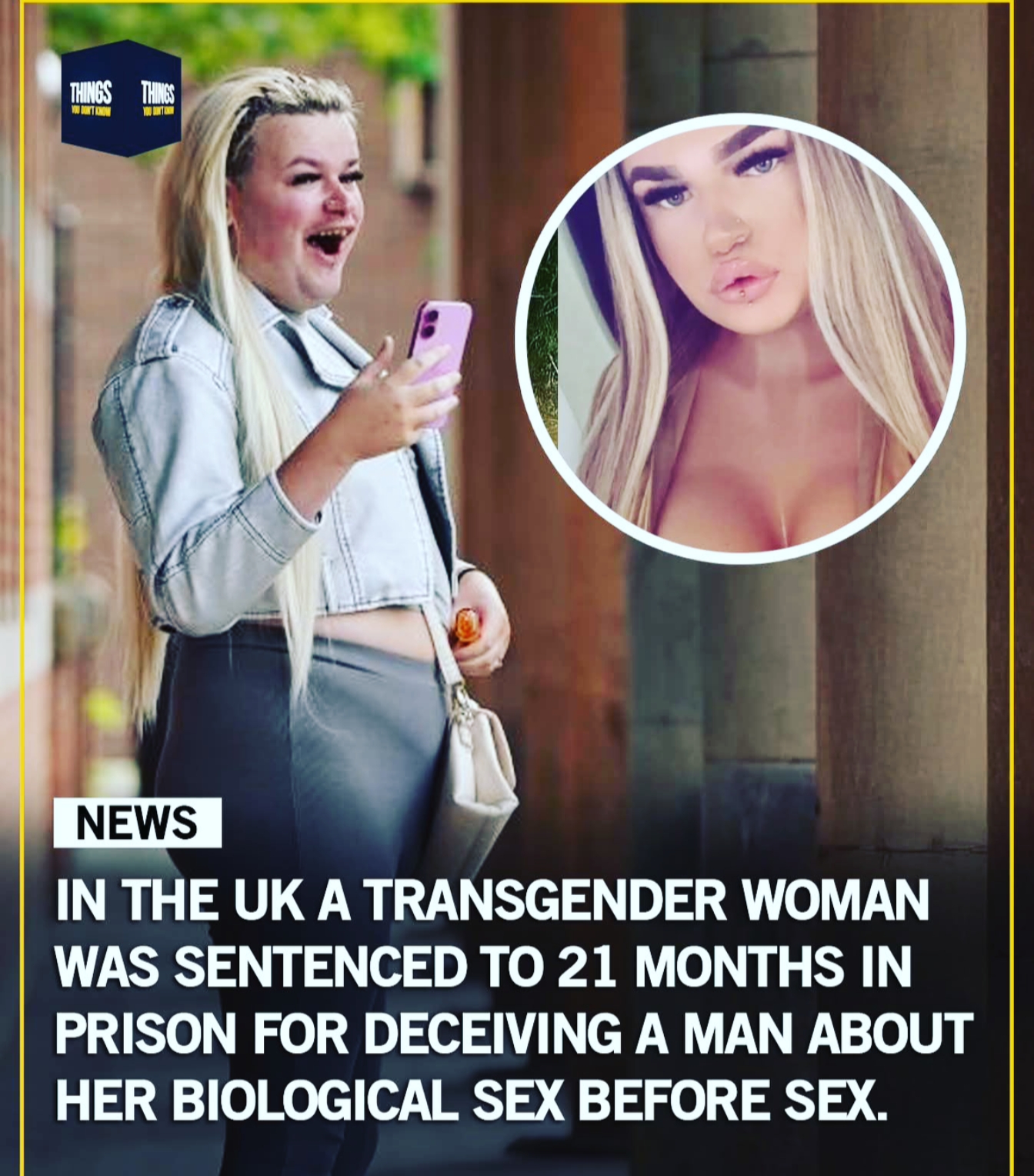
When a court in the United Kingdom sentenced a transgender woman to 21 months in prison for not disclosing her biological sex before entering a sexual relationship, the ruling sent shockwaves across the country. What began as a private encounter between two adults quickly grew into a national conversation about consent, honesty, identity, and the limits of personal privacy.
The woman at the centre of the case, identified as a transgender woman living openly in her chosen gender, met a man through mutual friends. Their relationship, according to court records, developed naturally. They spent time together, talked frequently, built trust, and eventually chose to be intimate. But after their encounter, the man discovered details about her biological past that he said he would have wanted to know beforehand. Feeling deceived, he went to the police. What followed was one of the most widely discussed trials of the year.
In court, the prosecution argued that genuine consent requires “material knowledge,” meaning information that a reasonable person might consider essential before agreeing to intimacy. For the man, biological sex was such a detail. The court accepted that argument, ruling that the encounter could not be considered fully consensual because the man did not have what the law considered “important information.” The judge described the woman’s lack of disclosure as deliberate deception and sentenced her to 21 months in prison. She was also placed on the sex offenders register and given a long-term restraining order.
But outside the courtroom, the reaction was far from unanimous.
Many believe the decision raises complicated and uncomfortable questions. LGBTQ+ advocates argue that forcing transgender individuals to disclose intimate details about their past can put them at emotional, social, and even physical risk. They say not all people understand or accept transgender identities, and mandatory disclosure can expose trans individuals to rejection or harm. Many fear the ruling sends the message that transgender people must “prove themselves” before anyone would consider their consent valid.
Others, however, feel the ruling reinforces the importance of trust in intimate relationships. To them, honesty about personal history is essential, not discriminatory. They argue that people have a right to know details that influence their choices about who they become sexually involved with. For them, the case is not about gender identity but about transparency.
Between these two perspectives lies a deep and emotionally charged debate about what people owe to one another before sex. Should personal history be private, or does intimacy create a duty to disclose? Should the law define what must be shared, or should individuals have the freedom to decide what they reveal about themselves?
This case also highlights a growing challenge in modern relationships. As society evolves and welcomes a wider range of identities and experiences, the rules of intimacy are also changing. Many people agree that no one should be pressured into sharing details that make them uncomfortable. Others insist that no one should be placed in a situation where they feel misled. Striking a balance between those two ideas is proving difficult.
Legal experts warn that the case may set a precedent for future trials. If non-disclosure of certain personal details can invalidate consent, what other kinds of information might fall into that category? Critics worry this could open the door to more legal conflicts, leaving both transgender individuals and their partners unsure of how the law interprets consent.
For now, the case remains a powerful reminder of how complex human relationships can be—and how laws written in another era are being tested by new understandings of identity and intimacy. As public debate continues, one thing is clear: society is still learning how to navigate these issues with compassion, fairness, and respect for everyone involved.